
The ICMR has already approved a bunch of rapid test kits for launch. The health ministry admitted that clusters of COVID-19 had appeared in many states and the risk of further spread remains very high.

In the past one week alone, Rajasthan, Madhya Pradesh, Chhattisgarh, and Andhra Pradesh have issued orders to take over private hospitals in some districts. Sohini Das, Vinay Umarji and Gireesh Babu report.
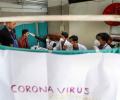
The test used now, called PCR (or polymerace chain reaction), uses a nasal or throat swab sample and identifies the virus. These tests take at least five hours to give results. The rapid test, on the other hand, uses a blood sample and gives results based on detecting the presence of certain antibodies that react to the coronavirus protein.

The Central Drugs Standard Control Organisation said while the rights, safety, and well-being of trial subjects were of paramount importance, protocol amendment, deviation or modification might be necessary in some cases owing to unavoidable circumstances.
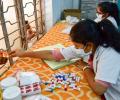
The situation is severe in North India as most of the logistics operation was manned by migrant labourers from Uttar Pradesh and Bihar. The problem with manpower is not only in courier and delivery services, but also at a shop level.

Anticipating a sudden and huge crowd in bank branches following the announcement of various measures by the government on Friday, the AIBEA said since the number of employees in bank branches are very few, the crowds can pose a big risk for the bank staff as well as for the customers who might be visiting in large numbers.
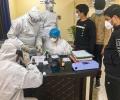
The ICMR is working on a war footing to develop the testing ecosystem -- especially for the screening blood tests. NIV, Pune, is in the process of validating antibody-based screening kits.
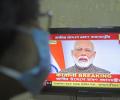
The telecast was viewed by 197 million Indians, higher than the Indian Premier League final which was watched by 133 million, reports Sohini Das.
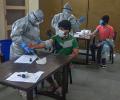
At present, the cost of testing for COVID-19 is Rs 4,500 per examination and the results are available within 24 hours. Almost 90 per cent of queries fizzle out after patients realise the cost of testing will not be borne by the government.
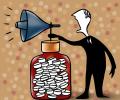
Medicines that fall under Schedule H category (class of prescription drugs) would be provided against a valid prescription that can be submitted either physically or over e-mail. Narcotics, psychotropics and controlled substances, though, cannot be delivered.

Retailers and multiplex operators want mall owners to either forgo rent for the period of the shutdown or lower rent in the event the mall is open but footfalls are low.

Employees asked to work from home... cancelled travel plans... curtailed meetings... Caution and precaution dominate Corporate India's response to Covid-19.

'There is a clear business impact. People are avoiding crowded places and gatherings across cities. This is hitting business, both at traditional and modern trade outlets, during the Holi season, which kicked off from Saturday,' says Praveen Khandelwal, general secretary, Confederation of All India Traders (CAIT).
Exports of 13 APIs - including paracetamol, tinidazole, metronidazole, vitamin B1, vitamin B6, vitamin B12, acyclovir, progesterone - along with formulations made from these APIs, would be restricted.

The patent application for 'System and method for wearable electronic devices', filed in 2007, mentions various wearable models including a shoe that can communicate data to the user, electronic communication devices attached to clothes, wireless ear pieces and ankle bracelets that can transmit updated information from the body to the user. The drawings the company submitted to the patent office also show the design of a shoe that can be a wearable electronic device.

Big pharma companies, however, said while it was true that formulation players would not rush to buy raw material, they could not afford losing customers.

The Duff & Phelps report shows that Virat Kohli has increased his brand value by 40 per cent to $237.5 million in 2019 and taken a huge lead with his closest rival, Akshay Kumar, ranked second.

Boeing 737 MAX planes were globally grounded in March 2019, after two of these crashed within five months, raising safety concerns.
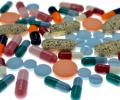
Indian pharmaceutical companies are heavily dependent on China to source fermentation-based active pharmaceutical ingredients and intermediates to manufacture these medicines, but the coronavirus outbreak there has disrupted the supply.
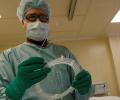
The new regime aims to bring in ease of doing business, as the NITI Aayog has proposed to do away with the need to have manufacturing licences to register medical devices or to get a certificate of compliance.
